Why Hasn't America Bought Bitcoin for Its Strategic Reserve Yet?
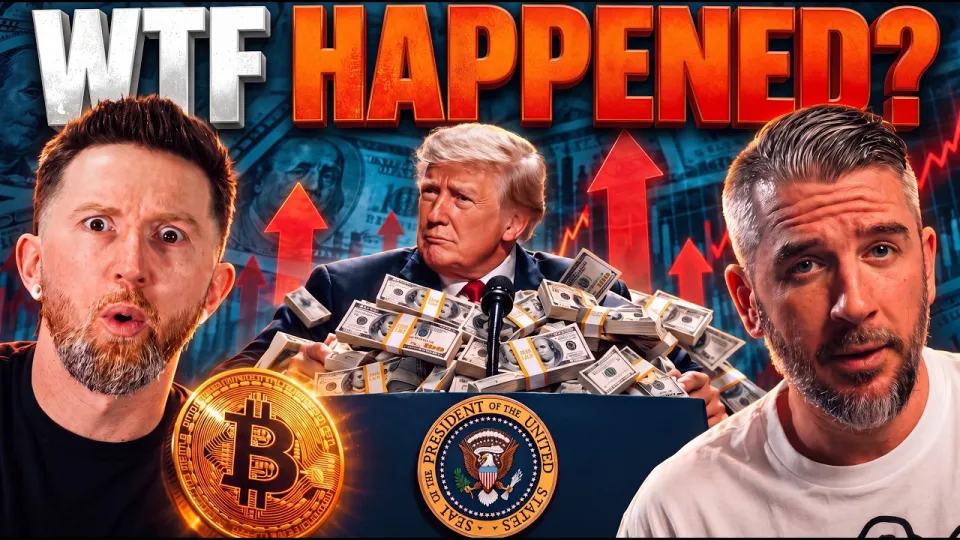
Video: LEAKED: Here's The REAL Reason America Hasn't Bought Bitcoin For its Strategic Reserve...
Need articles like this for your video? They help promote it on YouTube and Google — order them in the Telegram bot @sat_sit_bot. The bot writes and publishes the articles itself (with your YouTube video embedded) on popular topical websites (no ads). Your first 50 articles are free.
· based on the channel Simply Bitcoin
Key takeaways
- The US Strategic Bitcoin Reserve was created by executive order and is funded by forfeited bitcoin, not by open-market purchases.
- The White House has said the reserve must be budget-neutral, meaning no new spending on bitcoin for now.
- Market purchases would require Congress to appropriate funds, which has not happened.
- Custody, accounting and legal questions around seized bitcoin remain unsettled.
- Simply Bitcoin's After Hours panel argues the delay is about caution and politics, not the asset itself.
The United States has not bought bitcoin for its Strategic Bitcoin Reserve because the reserve is designed to be built from bitcoin the government already holds, mostly seized through criminal and civil forfeitures, and any open-market purchase would need Congress to appropriate money. The White House has publicly tied the reserve to a budget-neutral approach, so no taxpayer dollars are being spent on buying BTC right now. That is the short answer; the long one involves custody, accounting, and the politics of a brand-new asset class sitting on the federal balance sheet.
What the Strategic Bitcoin Reserve actually is
The Strategic Bitcoin Reserve is a stockpile of bitcoin owned by the US government, established by executive order rather than by an act of Congress. The key design feature is that it is capitalized with coins the government already controls, not with fresh purchases. Most of that stock comes from forfeitures: bitcoin seized in cases such as the Silk Road takedown and other criminal proceedings, held by agencies and eventually consolidated under Treasury management.
Because the reserve was framed as a way to stop the government from selling seized bitcoin too early, the first job was to hold what exists rather than to accumulate more. That distinction matters for anyone asking why the US has not bought bitcoin: the program was never launched as an open-market buying program in the first place. The debate over purchases is a separate, later step that requires new legal authority and new money.
Why open-market bitcoin purchases are blocked for now
Buying bitcoin at scale with federal funds is a budget question before it is a crypto question. Several concrete constraints sit in the way:
- Budget neutrality. The administration has said the reserve should not cost taxpayers new money, which rules out a simple appropriation for BTC purchases in the near term.
- Congressional authority. Spending public funds requires legislation. No bill appropriating money for bitcoin purchases has been signed into law.
- Custody and security. The government needs a documented custody arrangement, keys management, and audit trails before it adds to holdings. The panel notes that custody design, not conviction about bitcoin, is a live bottleneck.
- Accounting treatment. Agencies need a consistent way to value and report a volatile asset on the federal balance sheet.
- Market impact. A large sovereign buyer would move prices, and officials are sensitive to being accused of enriching existing holders at public expense.
Each of these is solvable, but none is solved by an executive order alone. That is why the reserve exists on paper while purchases remain a proposal.
The argument that the delay is political, not technical
The most pointed claim from the Simply Bitcoin discussion is that the holdup is about politics and caution rather than about bitcoin's merits. The panel's reasoning is that a reserve funded by forfeitures lets policymakers claim credit for innovation without ever defending a purchase price, and that buying at the top of a cycle would be a political liability if prices later fall.
There is also a strategic framing: if bitcoin is treated as a reserve asset comparable to gold, then waiting lets other countries accumulate first. The counterargument is that a slow, rules-based build protects the program from being reversed by the next administration. The discussion lands on a middle position: the reserve is real, the coins are real, and the buying decision is being deliberately deferred until the legal and budgetary groundwork is finished.
What would have to happen before the US buys bitcoin
A purchase program needs a chain of decisions completed in order. First, Congress would have to authorize and fund acquisitions, either through a standalone bill or as part of a broader digital-asset package. Second, Treasury and the agencies holding seized coins would need a unified custody and accounting framework so that new purchases are handled the same way as forfeitures. Third, the government would need a purchase mechanism that does not disrupt markets, such as scheduled acquisitions or auctions rather than a single large order.
Until those steps exist, the reserve will keep growing mainly through seizures and forfeitures. That means the size of the US bitcoin position is driven by law-enforcement outcomes, not by a buying desk, and observers should track court forfeiture orders and Treasury disclosures rather than waiting for an announcement of purchases.
Questions viewers keep raising about the reserve
Viewers of the After Hours episode repeatedly ask whether the reserve is just a rebranding of seized coins, and the answer is largely yes for now: the executive order consolidated existing holdings and barred premature sales. The more practical worry is what happens if the government ever sells, since a large liquidation would pressure prices and undermine the stated goal of treating bitcoin as a strategic asset.
Another recurring theme is trust in custody. If the government cannot securely hold keys, the reserve becomes a headline risk rather than a balance-sheet asset, which is why custody standards are treated as a prerequisite rather than a detail. The tone of the discussion is that the framework is moving in the right direction, just far more slowly than holders would like.
Bottom line on the US bitcoin reserve
The US has not bought bitcoin because the reserve was built to hold seized coins under a budget-neutral rule, and purchases require congressional funding, custody standards, and accounting rules that do not yet exist. The policy direction favors treating bitcoin as a strategic asset, but the execution is deliberately incremental. Simply Bitcoin's panel, in this video breakdown, frames the delay as bureaucratic and political caution rather than doubt about bitcoin's role. For now, watch forfeitures and legislation, not purchase announcements.
Source: LEAKED: Here's The REAL Reason America Hasn't Bought Bitcoin For its Strategic Reserve... · Markdown version
Questions & answers
Has the US government actually bought any bitcoin for the reserve?
No. The Strategic Bitcoin Reserve is currently capitalized with bitcoin the government already holds, primarily from criminal and civil forfeitures. Any open-market purchase would require Congress to appropriate funds, and no such appropriation has been made.
Is the reserve just a rebranding of seized bitcoin?
Largely, yes, at this stage. The executive order consolidated existing federal holdings and restricted premature sales. The strategic framing is new, but the coins themselves mostly came from law-enforcement seizures rather than from a buying program.
What would it take for the US to start buying bitcoin?
Three things in sequence: legislation authorizing and funding purchases, a unified custody and accounting framework for federal bitcoin, and a market-friendly acquisition mechanism such as scheduled buys. Until then, the reserve grows mainly through forfeitures.
Why does the panel think the delay is political rather than technical?
The argument is that a purchase program creates price risk and political exposure, while holding seized coins lets officials claim innovation without defending an entry price. The technical pieces, such as custody and accounting, are treated as solvable rather than blocking.